By Fotify
Event Speed Dating 2026: How to Host a Speed Dating Event (Complete Guide)
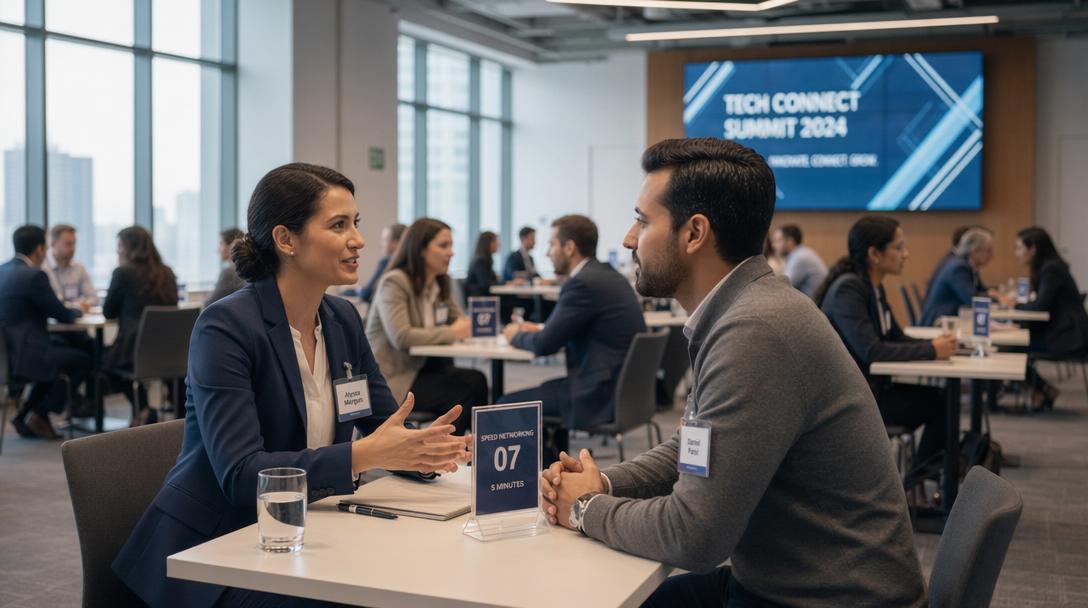
Speed dating is back — and in 2026 it looks nothing like the paper-form-and-stopwatch version from twenty years ago. Singles mixers, speed networking, and matchmaking nights are running at bars, bookstores, co-working spaces, rooftops, conferences, and even weddings. The format works because it solves the real problem behind every social event: everyone is there to meet someone, but nobody wants to make the first move.
This guide covers everything you need to host a speed dating event — whether it is a traditional singles night, a corporate speed networking session, a wedding icebreaker, or a virtual version. By the end you will have a format, a timeline, a tech setup, and a checklist you can run from.
What is Event Speed Dating?
Event speed dating is a structured social format where attendees meet each other in short, timed rotations. In the classic version, participants sit across from each other for 3–7 minutes, then rotate to the next person when a bell rings. After the event, participants submit who they liked, and mutual matches are revealed.
Modern event speed dating keeps the format but replaces the paper forms with an app. Instead of writing down names on a card, attendees swipe yes or no in real time on their phone. When two people both swipe yes, their contact information is revealed immediately — no waiting a week for organizers to mail out match lists.
The format works for more than romantic dating. The same structure powers:
- Speed networking at conferences and business events
- Singles mixers where the pace is slower and conversations are longer
- Matchmaking events for specific communities (religious, cultural, professional)
- Friend-making events like Bumble BFF meetups
- Wedding icebreakers where single guests from both sides get a structured way to meet
Choosing the Right Format
There are three main speed dating formats. Pick the one that matches your audience.
1. Classic Rotation Speed Dating
The most familiar format. Half the guests stay seated; the other half rotates through every seat. Each conversation is 3–7 minutes. Works for groups of 20–60 people with an even gender or role split.
Best for: traditional singles events, industry-segmented networking (founders + investors, mentors + mentees), any group where structured one-on-one time matters.
2. Open-Mingle with Matching App
Guests mingle freely for 2–3 hours in a bar, lounge, or venue. Instead of scheduled rotations, they use a matching app to swipe through the guest list on their phone. When they see someone interesting, they can either approach them in person or wait for a mutual match to be revealed.
Best for: larger groups (50+), casual settings, younger crowds, events where forced rotation feels stilted.
3. Hybrid Speed Dating
Open-mingle with short structured rounds in the middle. Guests arrive, mingle for 45 minutes, do a 30-minute round of 4-minute rotations to guarantee everyone meets everyone, then return to open mingling with the matching app active throughout.
Best for: most modern events. Gives the structure of classic rotations without the "school dance" feel, and the app keeps matches flowing all night.
The rest of this guide assumes the hybrid format, but the steps adapt to all three.
Step 1: Define Your Audience
Every successful speed dating event has a tightly defined audience. Attendees show up because they are confident they will meet people like themselves. Vague "singles event" invites underperform every time.
Examples of tight audiences:
- Single professionals, ages 28–40, in Brooklyn
- Tech founders and product managers at a conference
- Wedding guests aged 21+ who arrived without a plus-one
- LGBTQ+ singles over 35
- Book lovers who want to meet other book lovers
- Remote workers in a specific time zone (for virtual events)
The tighter the audience, the better the matching ratio. For a singles event, an even split between sides (men / women, or however your audience defines itself) is essential — a 70/30 split kills the energy. For networking events, a good split is 60% attendees / 40% speakers-mentors-investors.
Step 2: Pick a Date and Time
Speed dating events have their own rhythm:
- Weeknight evenings (Tue–Thu, 7pm–9:30pm) work best for singles events in cities — after work, before weekend commitments.
- Weekend afternoons work for casual singles mixers, LGBTQ+ events, and events with an older demographic.
- Conference lunch or cocktail hour is the sweet spot for speed networking — attendees are already there and primed to meet people.
- Wedding cocktail hour through dinner is the natural window for wedding speed dating — guests are ready to socialize but not yet on the dance floor.
Avoid Mondays, holidays, and Sunday nights. Avoid competing with sports finals and major cultural events.
Step 3: Choose the Venue
The venue sets the tone. Match it to your audience.
- Upscale bars and lounges — high-ceiling, ambient lighting, good acoustics. Works for 21–40 single professionals.
- Coffee shops and bookstores — lower-pressure, works for daytime events and introverted audiences.
- Restaurants with private dining rooms — works when you want guaranteed seating for rotation-style events.
- Co-working spaces — the standard for speed networking; usually comes with tables, chairs, A/V, and a bar option.
- Rooftops and outdoor venues — great for summer events and larger crowds (50+).
- Hotel ballrooms or conference suites — for paid ticket events with 100+ attendees.
- Existing weddings, galas, or corporate parties — speed dating as a segment inside a larger event.
Whatever you choose, confirm three things: acoustics (can two people 4 feet apart hear each other?), seating arrangement flexibility (can you set up rotation seating?), and Wi-Fi (critical if you are using a matching app).
Step 4: Set the Right Tech Stack
The tech you use decides whether the event feels modern or dated. A 2026 speed dating event runs on three tools:
- A registration system — for ticketing and collecting attendee info before the event
- An event matchmaking app — for real-time swiping, matching, and contact reveal
- A display screen or MC — for round timing and announcements
For registration, Eventbrite or Luma work well for public events. For private events, a simple form or a Fotify event with digital invitations handles invites and RSVPs.
For the matchmaking app, there are two categories. Dedicated speed dating platforms like SpeedMatchApp cost $100–$200 per month and are designed specifically for rotation-style events. All-purpose event matchmaking apps like Fotify's Match & Connect cost $19.99 per event with no subscription and work for any format — singles nights, speed networking, wedding icebreakers, or virtual events.
The key features to look for in any matchmaking app:
- No app download for guests (browser-based only)
- Privacy-first matching — contact info only revealed on mutual interest
- Custom profiles with photos, bio, and interests
- Real-time mutual match notifications
- Organizer metrics so you can see engagement
- Invite-only mode for private events with approved guests
Step 5: Build the Event Format
A hybrid speed dating event runs roughly like this:
| Time | Segment | Duration |
|---|---|---|
| 7:00pm | Doors open, welcome drink, profile setup | 30 min |
| 7:30pm | Host welcome + rules explanation | 5 min |
| 7:35pm | Open mingling, matching app active | 45 min |
| 8:20pm | Structured speed rounds (5 min each, 6 rotations) | 30 min |
| 8:50pm | Open mingling continues, matching app still active | 40 min |
| 9:30pm | Host wrap-up, match announcements | 10 min |
| 9:40pm | After-party / venue stays open | 60+ min |
The magic of this format is that the matching app runs continuously. A guest who did not connect during the structured rounds still has matches appearing on their phone during open mingling. An introverted guest who hates cold approaches can do all their connecting through the app.
Step 6: Pre-Event Promotion
A good speed dating event sells out 2–4 weeks in advance. The audience has to trust the ratio and the vibe before they commit.
Promotion channels that work in 2026:
- Instagram and TikTok with short-form content featuring past events or your host
- Local Facebook and Meetup groups — often free and high-intent
- Cross-promotion with nearby bars, coffee shops, and influencers
- Partner newsletters from local dating coaches, matchmakers, or lifestyle brands
- Dating app ads (Hinge, Bumble, Hinge) can work for singles events but need careful targeting
- LinkedIn posts for speed networking and professional events
Price the ticket to filter out casuals. $20–$45 is the sweet spot for singles events — expensive enough to commit, cheap enough not to gatekeep. Speed networking events at conferences are usually included with conference registration.
Step 7: Day-Of Checklist
On the day of the event, run this checklist:
- Venue setup: rotation seating, signage, host stand, welcome table
- Registration table with name tags and a tablet for last-minute sign-ups
- Welcome drink ready
- Matching app activated and tested with a team member's phone
- QR code printed at least 3 times (welcome table, bar, bathrooms) so guests can scan
- Timer / bell / screen for round transitions
- Host briefed on script and rules
- Photographer booked (optional but raises future ticket sales)
- A clear policy for inappropriate behavior and a point of contact
How to Host Speed Dating with Fotify Match & Connect
For organizers using Fotify, the full workflow takes about 15 minutes of setup:
- Create a Fotify event at dashboard.fotify.app with the date, venue, and a short description
- Add the Match & Connect add-on ($19.99)
- Activate Match & Connect when your event starts (or earlier — guests can create profiles during registration)
- Enable Invite-Only mode and upload your ticket-holder CSV so only paid attendees can create a profile
- Create a custom short URL like
fotify.app/mc/YOURNIGHTso you can print it on tickets and signage - Print QR codes for the welcome table and around the venue
- Announce the app during the host welcome and let guests start swiping
Because Match & Connect is a browser-based event matchmaking app, guests never download anything. They scan the QR code, sign in with Google or email, build a short profile with up to 3 photos and a bio, and start matching immediately. When two guests swipe yes on each other, their Instagram, LinkedIn, or WhatsApp handles are revealed on both sides at once.
For wedding speed dating or singles mixers inside a wedding, the setup is even simpler — you already have Match & Connect running for the whole reception, so you just announce during cocktail hour that single guests should open the link and start swiping. No separate event needed.
Virtual Speed Dating
Virtual speed dating follows the same format but runs on Zoom or a similar platform with breakout rooms. The host manually rotates guests between breakouts every 4–5 minutes.
The matching app layer still matters — without it, virtual speed dating is a nightmare of "here is my number, text me" exchanges that everyone forgets 24 hours later. With Match & Connect or a similar tool, contact reveal happens automatically when both guests swipe yes, so nobody has to awkwardly ask for a number on video.
Pro tip for virtual events: run a 10-minute "profile building" segment before rotations start. Share the matching app link, give everyone 10 minutes to build a profile with a photo and bio, and only then open breakouts. Guests who join late can still participate — just drop them into the rotation at the next break.
Speed Dating vs Speed Networking: What Changes
The format is 90% identical. The differences:
| Element | Speed Dating | Speed Networking |
|---|---|---|
| Audience | Singles | Professionals |
| Round length | 3–5 minutes | 5–7 minutes |
| Profile fields | Bio, interests, intentions | Bio, role, company, what you're looking for |
| Contact reveal | Instagram / WhatsApp | LinkedIn / email |
| Vibe | Playful, romantic | Focused, professional |
| Common setting | Bars, lounges, rooftops | Conferences, co-working, corporate events |
If you are organizing a corporate event, the same matchmaking app works — just prompt guests to share LinkedIn instead of Instagram. For a deeper dive, see our guide to the best event networking apps in 2026 and our full playbook on how to network at conferences.
Hosting Speed Dating Inside a Wedding
One of the fastest-growing use cases is running a wedding singles mixer during the cocktail hour of a wedding. This used to require a paid entertainer, forced introductions, or a "singles table" that everyone dreaded.
With an event matchmaking app running in the background, you get a modern alternative. The couple creates one Fotify event for the wedding (photos, RSVPs, DJ song requests), adds Match & Connect, and announces it during the toast: "if you're single, open the app — we'd love to see some matches happen tonight." Guests who want to participate opt in; everyone else ignores it. Because matches are private and socials are only revealed on mutual interest, nothing awkward happens.
For couples considering this, we wrote a full breakdown of how to help singles meet at weddings — including common mistakes and how to announce it without making anyone feel targeted.
The Biggest Mistakes to Avoid
After organizing and reviewing dozens of speed dating events, here are the mistakes that kill momentum:
- Ignoring ratio. A 70/30 split between sides destroys the experience. If registration is unbalanced, cap the majority side and keep the waitlist open until the other side catches up.
- Over-booking. 40 guests in a room meant for 25 feels chaotic. Better to sell out small than to feel crowded.
- No app / app that requires download. Paper forms are dead. An app that requires guests to download and create an account from the App Store will lose half your attendees in the first 5 minutes.
- Skipping the host. A good host sets the tone, enforces rounds, and handles issues. Do not try to host it yourself if you are also running logistics.
- Not collecting emails. Every attendee is a future attendee. Get their email at registration so you can invite them to the next one.
- Revealing match counts publicly. The fun is private. Show aggregated engagement metrics to the group ("we had 47 matches tonight!") but never individual data.
Pricing Your Event
Pricing varies by audience and city, but rough benchmarks:
- Casual singles mixer, smaller cities: $15–$25
- Urban singles event with venue buyout: $35–$60
- Premium matchmaking event with curated attendees: $80–$200
- Corporate speed networking at conference: usually included with conference ticket
- Wedding speed dating (as part of wedding): free for guests; couples pay the $19.99 app add-on
If you are building a recurring event series, offer a season pass. Regular attendees bring the energy and the word-of-mouth.
The Takeaway
Event speed dating works in 2026 because the tools finally match the format. A decade ago, organizers needed stopwatches, paper forms, and a week of data entry to run a single night. Today, a matchmaking app handles matching, contact reveal, and privacy in real time — and costs less than the welcome cocktail.
If you have been thinking about hosting a speed dating event, a singles mixer, or a speed networking night, the technology is no longer the blocker. Pick a date, pick a venue, pick an audience, and run the playbook above. For the matching app layer, Match & Connect by Fotify is the fastest way to get started — $19.99 per event, no subscription, no app download for guests, and you can be live in under 15 minutes.
For more on the space:
- Best Event Networking Apps 2026: 10 Platforms Compared
- How to Help Singles Meet at Weddings (Without the Awkward Setups)
- Match & Connect: The New Way to Help Event Guests Network and Mingle
Pricing may vary depending on your country and currency. See the latest pricing on the pricing page.
Related Pages
Discover how Fotify can transform your events